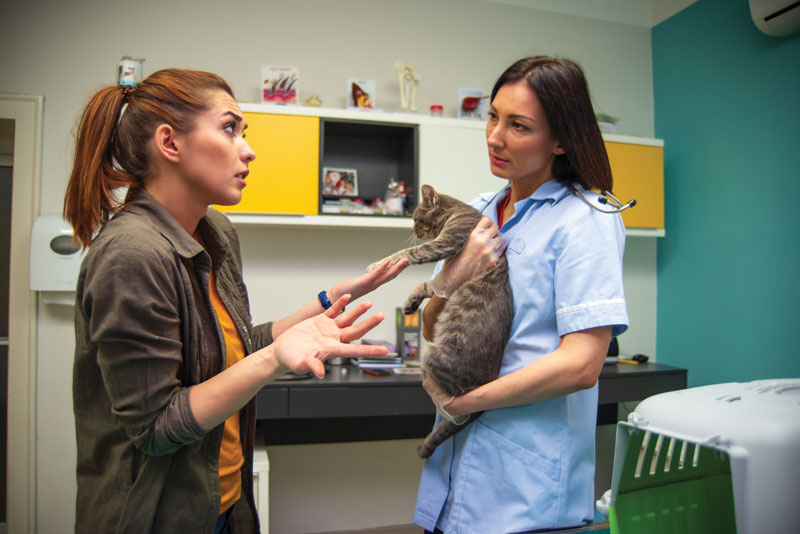
Whether 100 percent indoor cats or those that get outside occasionally, all need to be on a flea preventative. Tips below on how to convince your clients. Photo: Bigstock/llaszlo
Besides being pesky ectoparasites that make my skin crawl hours after they are long gone, along with the pet who brought them along for the ride, fleas carry the risk of disease transmission. Infectious diseases can be transmitted to numerous species, several of which are zoonotic. Thus, these tiny, wingless, parasitic insects have One Health ramifications that extend well beyond flea allergy dermatitis (FAD), nuisance pests, and home invaders. They require addressing with clients and our community, through infectious disease prevention education, ectoparasite prevention and control measures, including environmental considerations, and more. As advocates for our patients, we need to be proactive about preventive measures, and in most of the U.S., flea and tick prevention should be year-round. Don't discount these little critters because they can pack a powerful (infectious) punch that contaminates the environment and puts humans and other animals at risk.
|
One Health and fleas
One way we can help minimize the spread of zoonotic diseases is by implementing effective ectoparasite control measures. This applies to companion animals and livestock alike. Fleas pose risks, and with client education, a keen understanding of the flea life cycle, and numerous advances in preventives, we can significantly improve our patients' health, reduce environmental contamination and reservoir host populations, and ultimately prevent human infections. Key One Health efforts with lasting effects but minimal effort on our part. How long does a flea-prevention conversation need to be?