.png)
.png)
.png)
.png)
.png)
.png)
.png)
.png)
.png)
.png)
.png)
.png)
|
Special considerations
Ideally, problems in guinea pigs should be treated medically first before resorting to surgery. According to Rettig, some conditions can be avoided with good husbandry.
"Appropriate nutrition, especially when it comes to providing Vitamin C and plenty of long-stem hay, and clean and well-padded bedding for good foot health, are important," she says. "Some guinea pigs presenting with dental concerns such as drooling and dropping food can be started on analgesics, which may improve their appetite and can sometimes buy time between anesthetic procedures. Some clinical signs of ovarian cysts can be managed with cystorelin injections, or the cysts can be drained, but these are not long-term cures. In female guinea pigs, often the urinary stones are palpable at the distal urethra and can often be removed with analgesia and sedation."
When surgery is unavoidable, it's crucial to consider the guinea pigs physiology and how it differs from dogs and cats.
"Become familiar with IV catheter placement sites in this species," says Rettig. "We typically place our IV catheters after sedation. Guinea pigs can have very thick skin, so a cut down can be helpful."
Rettig says because guinea pigs cannot vomit, they don't need to be fasted for surgery, but they often hold small amounts of food in their mouth.
"We typically rinse their mouths with a few syringes of water right at the time of induction to make sure there's no food in their mouth at the time of surgery," she says.
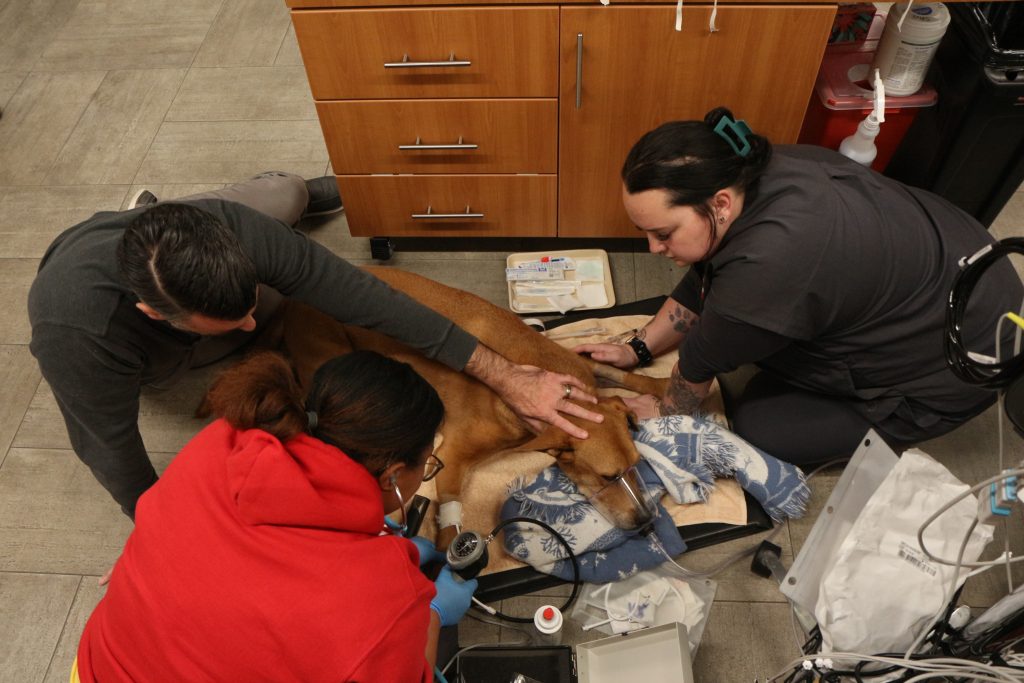
Because guinea pigs are small patients that are challenging to intubate, Rettig is currently using a mask to anesthetize them.
"Right now, I cannot intubate a guinea pig, but this is a skill I'm hoping to learn at the Exotic 365 Conference in August in a wet lab," she says. "They have a small thoracic cavity relative to the size of their abdomen like most of our herbivorous patients do."
She adds small patients can also be more challenging to monitor under anesthesia. "Sometimes it's difficult to get all our monitoring equipment attached," she says. "Sometimes the end tidal CO2 has trouble reading their small breaths, even with a well-fitting mask, and the monitoring equipment is often relatively close to the surgical field."
Rettig adds she prefers to do procedures with the guinea pig in sternal recumbency if possible, finding they breathe better in that position.
"This is one of the reasons I prefer flank ovariectomy over ventral midline approach when spaying a guinea pig with no known uterine pathology," she says. "Their thick skin can also make incision closure challenging. I often add skin staples to the final layer of my incision, and I find that they tolerate them very well. With good analgesia on board, guinea pigs usually don't bother their incisions and, in my experience, they don't tolerate e-collars."
Dr. Pokard states when surgery is unavoidable in guinea pigs, meticulous preparation and post-operative care are also essential to reduce risk and improve outcomes.
"Guinea pigs should never be fasted, as continuous gastrointestinal motility is critical," Pokard says. "Patients should be stabilized beforehand with fluids, pain control, nutritional support and thermal support. Baseline diagnostics, such as bloodwork and imaging, should be obtained. Multimodal analgesia should always be used."
She adds antibiotic selection requires caution, as guinea pigs are highly sensitive to antibiotic-induced dysbiosis with certain drug classes. According to James W. Carpenter, DVM, professor of Zoological Medicine at the Kansas State College of Veterinary Medicine, in a paper entitled "Pharmacotherapeutics in Exotic Small Mammals: An Update and a Review" for the World Small Animal Veterinary Association Congress in 2006, penicillins, including ampicillin and amoxicillin; cefazolin, clindamycin, erythromycin, lincomycin, dihydrostreptomycin, streptomycin, bacitracin, chlortetracycline, oxytetracycline, tetracycline and tylosin should not be used in guinea pigs.
Post-op care
The care guinea pig patients receive after surgery is crucial to their prognosis, according to Pokard.
"Post-operatively, patients require immediate assisted feeding, hydration, aggressive pain management, ongoing thermal support, and close monitoring for anorexia, ileus, respiratory distress and wound complications," she says. "With careful preparation and attentive aftercare, surgical outcomes can be significantly improved, although risks remain higher than in dogs and cats."
Rettig also provides assisted feeding to guinea pigs after surgery.
"We typically assist-feed all of our guinea pig patients after anesthesia with Oxbow's Critical Care Herbivore or another similar product to ensure they're back to eating quickly," she says. "Most of my patients will also go home with a bag if their owners don't already have one."
Rettig adds like in her dog and cat patients, she only treats with antibiotics after surgery if indicated by the underlying disease process.
For post-operative care at home, Rettig asks owners to watch their pets closely. "I instruct owners to check their pet's incision daily, especially if it's a ventral incision since these guys have such short little legs and will drag their incision on the ground, including through urine and feces," she says.
Although guinea pigs are often thought of as doing poorly both during and after surgery, Pokard states with the right knowledge, surgeons can be successful with these small patients.
"Guinea pigs are not poor candidates for surgery," she says. "I believe this is a misconception due to the specialized care they require. You just must take special considerations when considering surgery for guinea pigs."
Audrey Pavia is an award-winning freelance writer who specializes in pet and veterinary topics. She lives in Southern California with a menagerie of dogs, cats, and horses.