.png)
.png)
.png)
.png)
.png)
.png)
.png)
.png)
.png)
.png)
.png)
.png)
(Part 1 focused on canine bronchitis.)
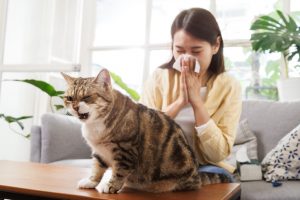
How many times do you come across a coughing cat with or without respiratory distress? In cats, we usually refer to feline lower airway disease (FLAD) as asthma because owners understand this, and, as a profession, we haven't fully clarified the distinctions between asthma and chronic bronchitis in cats. Regardless, FLAD is commonplace. Let's take a deep dive into FLAD, clinical findings, diagnostics, and treatments. Recognize client education is paramount when treating a pet with this condition, offering us an opportunity for One Health education. Cats may act as sentinels for high allergen loads in the home, therefore underscoring risks for human family members. Understanding pets can serve as indicators of human risk of illness from environmental exposures is essential for safeguarding family health and maintaining the human-animal bond.
Feline lower respiratory tract disease: asthma vs. bronchitis
What is asthma?
I stated in Part 1 (chronic bronchitis in dogs) we don't really speak of chronic bronchitis in cats; this isn't exactly true. However, asthma vs. bronchitis is usually an advanced diagnosis, requiring airway sampling. Cats may manifest with either neutrophilic (more common experimentally, or in chronic bronchitis) or eosinophilic (more common clinically and in asthmatics) inflammation. When both are present, the literature suggests a chronic asthmatic bronchitis condition may be present.1 Is this just semantics? Some suggest asthmatics will manifest with severe bronchoconstriction, while those with chronic bronchitis do not.2 Even with advanced airway imaging and sampling, researchers and specialists do not fully agree on how to define these different FLAD states.
Does it really matter what we call it? The two conditions cannot be distinguished based on physical findings, history, or radiographic changes. Focusing on stabilizing those patients in respiratory distress and managing airway inflammation is paramount, regardless of the minutiae of the clinical diagnosis.3,4 Irrespective of how we define FLAD in cats, clinical findings and management aim to reduce airway inflammation and treat any underlying triggers, e.g., parasitism (lungworms), remove allergic triggers, e.g., cigarette smoke, and rule out heartworm disease.5,6
Signalment
FLAD can be seen in both sexes and any breed; however, Siamese are often overrepresented in studies, suggesting a possible increased risk.5–7 Age of onset varies, but the median age at presentation is about five years in many studies, with a range from one to 12 years.5
Differentials
Differential diagnoses for coughing in cats are easy: asthma, asthma, and usually, asthma. Though additional causes may include:3,6,8,9
- Chronic bronchitis (coughing, wheezing, generally without bronchospasm/constriction)2
- Parasitic bronchitis–e.g., secondary to lungworms
- Heartworm disease (though cats rarely, if ever, cough with this condition)–While we cannot treat this condition, its presence negatively impacts prognosis, carrying a much worse prognosis due to worm die-offs and potentially irreversible damage to the pulmonary system. Thus, knowing if it is the inciting cause may affect an owner's decision to proceed with treatment (especially in emergency situations). Simply ensuring owners are aware of a more guarded prognosis with this condition vs. the more commonly seen etiologies of FLAD is crucial before proceeding with care and spending finances.7,8
- Bronchiectasis
Clinical signs of FLAD
Clinical signs and signalment can greatly help with diagnosis. Physical exam findings may include cough, wheezing, grunting, prominent expiratory push, tachypnea, and episodes of dyspnea. Often, owners don't quite recognize the cough as a cough, and these patients are sometimes identified incidentally when presenting for wellness or sick visits. However, one or more of these signs, along with signalment and physical exam findings, can help support a clinical asthma diagnosis; however, diagnostic tests to rule out other possible causes should be considered.2,6,9,10
Clinical signs may be variable and include waxing and waning episodes of coughing, which many owners misinterpret as "trying to vomit up hairballs" and incorrectly think their pet has GI issues, when in fact the pet is coughing. Instead, we can see coughing fits, which are often followed by vomiting. Wheezing, variable respiratory rates, and cough may fluctuate, and auscultation may be normal at the time of diagnosis. Cats that present in respiratory distress with acute emergency disease usually have harsh lung sounds +/- wheezes with variable degrees of tachypnea and dyspnea. Generally, signs include:6,7,9
- Coughing (may be paroxysmal/episodic) and may vomit after an episode (where the owners perceive dry heaving vs. coughing
- Elevated respiratory rate
- Dyspnea
- Wheezing
Diagnostics
Diagnosis is often made based on signs, physical exam findings, history, and radiographs. Generally, it is a relatively easy diagnosis. However, given the potential differentials for heartworm disease and lungworms, we always want to consider ruling out other things.
Most people start with imaging as their first diagnostic, which is very reasonable. Often, findings support a diagnosis of FLAD (aka asthma). Common radiographic findings may include one or more of the following in patients with FLAD:5,11,12
- Clinically normal lungs
- Bronchiolar pattern
- Hyperinflation
- Diaphragm flattening
- Atelectasis of the right middle lung lobe
Additional diagnostics include:5,11,12
- Heartworm testing
- Fecal (Baerman Method) to screen for lungworms (or airway wash may help to identify their presence). Repeat sampling may be warranted when the index of suspicion is high, as prepatent infections or intermittent fecal shedding may lead to a misdiagnosis.13
- Trial course of medications. Response to clinical therapy (Sometimes, this is your only option when clients tie your hands financially).
- IgE evaluation. This may be beneficial from a research perspective, as generally those with asthma will have higher levels, indicative of possible allergen exposure/contributions. However, levels will not guide therapy and, at least to date, would be more educational than aiding in guiding clinical therapy. If a patient also has atopy or other immune-stimulating processes that may warrant allergen therapy, this may be beneficial.14
- Airway sampling/bronchoscopy. More commonly done in canine medicine, but feasible in cats as well.
Concurrent disease
Since the mainstay of treatment in FLAD is steroids, careful monitoring for diabetes and underlying heart disease is crucial to minimize negative outcomes, including the development of congestive heart failure (CHF).
Additionally, some patients may already have comorbidities when diagnosed with FLAD. Cats with diabetes may need to start inhaled steroids as soon as possible to minimize the negative effects of steroids on glucose control. Those with underlying heart disease will need to be very closely monitored, as oral steroids could increase the risk of CHF.
Before starting steroids in cats, especially in those that may be a little older or are obese, consider baseline glucose and fructosamine levels and monitor closely during therapy. Recommend echocardiography for patients with heart murmurs to ensure long-term oral steroids can be tolerated, and ideally initiate inhaled steroids at the time of diagnosis to minimize oral steroid use.15 Inform clients, even those with patients without murmurs (since many of our feline patients have cardiac disease without the presence of a murmur), heart disease is a risk with chronic oral steroid use.
Treating FLAD
As with treating our canine bronchitis patients, the primary goal in treating FLAD is to minimize the inflammatory cycle and the resulting damage. We aim to minimize adverse effects, control signs (coughing, wheezing, respiratory distress), and improve quality of life. Rarely can we eliminate an obvious underlying allergic trigger, but if feasible, great. If parasitism is contributing to the condition, treat the underlying condition and manage clinical signs. The key to successful treatment, however, is recognizing that our primary goal is to control inflammation.2,6,9,16 Therefore, evaluate the subsequent therapeutics, considering their mechanisms of action, efficacy, safety, indications, and supporting evidence.2,6,7,9 (* See below for more details)
- Steroids*–Anti-inflammatory doses of oral steroids or inhaled steroids.
- Bronchodilators*–Used less commonly in feline airway conditions than in our canine patients, they can be utilized in the hospital (injectably) during acute crises or in patients who fail glucocorticoid therapy alone, orally at home.
- Obesity management–We talk about this in our canine patients because we have research supporting it. In feline medicine, it stands to reason weight reduction would improve clinical signs, but research is lacking.
- Exercise restrictions–Let the patient dictate activity. An indoor-outdoor cat will likely be harder to control clinical disease, especially if outdoor allergens are contributing to clinical signs. This must be weighed against the stress and anxiety that may arise from forcing a cat accustomed to access to the outdoors to become a house cat.
- Irritant/allergen reduction–Reduce triggers whenever possible. This may seem obvious, yet it can be challenging for some owners. Smokers must be informed not only to refrain from smoking in the home or near pets, but also to change clothes and wash hair before interacting with the cat, as these actions can provoke adverse reactions. Avoid wood-burning stoves and fireplaces; refrain from using chemical cleansers and related products; limit household dust by changing air filters frequently and using air purifiers; and keep windows closed while using heaters or air conditioners.
Dosing and drug details
More detailed info on steroids:
Initiating oral corticosteroids right away is essential. Prednisolone at 2 mg/kg/day (anti-inflammatory doses) should be divided q 12 hours, planning to wean over time to the lowest dose tolerable to still control clinical signs or until inhaled steroids take full effect. Dose reductions can be attempted in seven to 14 days, based on individual patient response. Reduce doses weekly to every two weeks, depending on patient response, to reach the lowest dose that still controls clinical signs. Many patients can reach every other day or every few days. While weaning, if signs worsen, increase back to the lowest dose where control was seen and perform a slower wean.9,17
Inhaled steroids
Fluticasone propionate, a generic and relatively cost-effective option, is usually our first-line treatment. A dose of 110-250 mcg via inhalation with the AeroKat mask (and spacer) every 12 hours works well for most patients. Instruct owners to hold the spacer with a tight seal against the cat's face for 10 seconds, allowing sufficient time for the cat to inhale the medication.9,18 Most cats adapt quickly and within a short period of time.6,19 Another option for those more severely affected, such as cats that present emergently with dyspnea and in an acute attack, is to start at the higher dose range, e.g., 220 mcg q 12 hours, and taper to the lowest effective dose.18 Be clear with clients and ensure to inform them it can take seven days or more (up to a few weeks) for inhaled steroids to reach full therapeutic effect. Thus, for those that present with acute clinical disease and especially those in respiratory distress, a tapering dose of oral steroids is warranted while initiating therapy with the inhaled form to permit sufficient blood levels for effectiveness while also addressing and dampening active inflammation.
I usually start at 110 mcg in small cats (and smaller dogs) and at higher doses in larger-breed dogs, and have had good success to date. Effects can take seven-10 days, though I usually tell clients up to two to three weeks for the full effect. Ensuring they do not expect miracles, especially if oral steroids are being tapered relatively quickly. Additional medications have been evaluated in cats as part of combination therapies, but research remains limited, and further research is warranted.2,6
While cats generally tolerate oral steroids with fewer overt outward effects than do our canine patients, long-term use of oral glucocorticoids is not without risks. Thus, the benefits of inhaled vs. oral steroids must be considered when discussing this diagnosis with owners. Ensuring owners realize that with just a little work on their part to acclimate their cats to the mask and spacer, they may have few to no clinical signs. This, thus, decreases the risks of complications from chronic steroid use, including the risk of diabetes development, obesity, and unmasking occult heart disease. Cats on inhaled steroids may still show increased thirst, but most do not show an increase in appetite. My experience is that inhaled is generally well tolerated and with minimal to no clinical signs.6,10
While current research is minimal in comparing the effectiveness of oral vs. inhaled steroid therapy,20 the benefits of inhaled therapy over oral include: 2,10,21,22
- Optimization of pharmacokinetics/pharmacodynamics
- Decrease systemic endocrine and immune adverse effects
- Allows higher dosing locally in the airways; directly where disease is present
Additional research on clinical patients, rather than on animals with artificially induced asthma, is warranted to better identify health outcomes.
International Cat Care has a good video tutorial on training a cat to use an inhaler with a spacer. They have additional information that can be beneficial to owners as well.
Bronchodilators
Daily bronchodilators in FLAD seem to elicit more variable responses than in dogs with chronic bronchitis. This could be because of less clear distinctions and difficulty in clinically diagnosing feline asthma vs. feline chronic bronchitis. In stable cats without acute respiratory distress, I generally start with addressing the inflammatory component (glucocorticoids) and add a bronchodilator only in those that fail to fully respond.
For those presenting in acute distress, in addition to oxygen, minimizing handling/stress, and sedatives (usually butorphanol at 0.2 mg/kg), I will use injectable bronchodilators in the hospital, e.g., terbutaline, for acute respiratory distress. However, they aren't safe for all patients and should be used cautiously in those with underlying heart disease, glaucoma, seizures, diabetes, hypertension, or hyperthyroidism.23 Whether the pet is then sent home with an oral formulation should be made on a case-by-case basis.
Regardless, bronchodilators should never be used as the sole therapy at home, however, because they fail to address the primary clinical component triggering signs, airway inflammation. In some cats without sufficient clinical control with oral or inhaled steroids, an oral option at home may be beneficial. Options include a few drug classes, and some clinicians are now using the combined steroid/bronchodilator inhalers for feline patients, but more research is needed. 2,7,9 For cats that develop not just classic respiratory signs (wheezing, coughing, tachypnea, dyspnea) but also severe bronchospasm (status asthmaticus), these patients often require lifelong management with bronchodilators in addition to steroid therapy. Most everyday run-of-the-mill FLAD cases don't. Generally, if cats develop bronchiolar destruction leading to true chronic bronchitis, they do not manifest with severe, potentially fatal bronchoconstriction and thus do not generally require long-term bronchodilators.2,9
Rescue inhalers
Do not forget to prescribe a rescue inhaler. Albuterol (90 mcg) is a short-acting bronchodilator used to treat acute respiratory distress. Albuterol is not for daily use; in most cases, it should be used as a rescue only. Research suggests that it can de novo increase airway inflammation and is thus primarily reserved for at-home emergency treatment of the acute onset of bronchoconstriction during an asthma attack.2,9,16
Maropitant
What about maropitant, a neurokinin-1 receptor antagonist? I have used this with my asthma cats; however, evidence supporting its use is lacking. Because of mild anti-inflammatory/anti-cough properties thought to be present, researchers have looked briefly at its use as an adjunctive therapy in the management of FLAD. Unfortunately, clinical improvement and changes in airway inflammation aren't statistically significant, and thus, its initial promise as a beneficial therapy hasn't panned out.24 For cats that vomit with coughing fits, it may help reduce this complication until steroids are sufficient to minimize/resolve the cough.
Antibiotics
For appropriate antimicrobial selection in suspected cases of FLAD with a concern for infectious pathogens contributing to clinical signs, please consult the ISCAID Antimicrobial Use Guidelines for the Treatment of Respiratory Tract Disease in Dogs and Cats, which are founded on evidence-based advice from experts. Note the antibiotic of choice for presumptive mycoplasma in cats is doxycycline.25 However, research doesn't support treating all patients with antibiotics.
In a meta-analysis by Boedec,26 studies failed to find a significant association between cats with lower respiratory tract disease and isolation of mycoplasma. Further, they noted mycoplasmal organisms may be found in healthy cats; thus, we need to interpret any respiratory testing results with a grain of salt and not throw antibiotics at every cat we see, to ensure we practice proper antimicrobial stewardship, do not overuse antimicrobials important to human use, and do not unnecessarily cause harm to the healthy microbiome of a patient we are treating. Thus, think before you reach for that antimicrobial when treating FLAD.25,26
In a 2024 article by Robin et al., the prognosis was evaluated with and without Mycoplasma felis detected by PCR. They found that identifying the organism didn't adversely affect prognosis, stressing that we still need more research to determine whether antibiotics are indicated in the treatment of FLAD.27
Think before you reach for antimicrobials in these patients. FLAD is generally an inflammatory condition. Could they have a secondary bacterial component? Possibly. However, reach for antibiotics that make sense. Use something that could treat Mycoplasma if it is playing a role, such as doxycycline. Do not use third- or fourth-generation cephalosporins such as cefovecin, as inappropriate antimicrobial use is unlikely to address pulmonary infiltrates given their spectrum; this class, along with fluoroquinolones, should be used in accordance with ISCAID respiratory guidelines.25,28–30
Client education: Paramount
Ensure you are educating each and every pet parent with a cat with FLAD on the following:
- Teach them to keep an eye out for a persistent or increasing cough, a blue tint to the tongue or gums, difficulty breathing, or weakness/collapse.
- Ensure they understand treatment is often lifelong and stopping therapy can lead to worsening clinical condition, more severe and harder to treat clinical disease, with chronic airway damage. Some cats may have an acute episode and wean off meds and not need them for a long time, but I have found this is rare now, and most need lifelong therapy, especially those that present initially in respiratory distress and require treatment.
- Owners need to be taught breathing rapidly, respiratory distress, severe coughing to the point of anorexia, and weakness shouldn't be permitted. Owners need to understand recognizing a flare is paramount, and treatment should be instituted immediately. It's not "let's wait a few days and see how they do," only bringing them in when severe dyspnea occurs. Teach owners how to monitor resting respiratory rates at home. Have them monitor for worsening trends. If the resting rate starts to climb, even in the face of otherwise normal feline behavior, a re-evaluation is warranted, as an acute attack could be imminent.
- Inform owners of side effects of any medications prescribed and any consequences of abruptly stopping or failing to continue treatment, when warranted. Ensure they understand the differences between inhaled (generally minimal risk and a low side-effect profile) and oral steroids, with their associated risks. In cats, the risk of unmasking occult heart disease with chronic steroid use orally, PU/PD, and weight gain, as well as their higher risk of developing diabetes, must be clearly explained.21
- Explain to owners environmental triggers should be eliminated when feasible.
- In cases where underlying parasitism incites FLAD, treatment of the airway may be warranted until full cure is achieved. Then, a trial without medications can be attempted to see if any residual clinical disease remains. In the case of lungworms, however, we could achieve full resolution in mild cases where permanent lung damage has not yet occurred and lifetime therapy may not be needed.2,6
- If heartworm disease is identified, discuss prognosis and advise that we cannot treat the underlying heartworm disease, but can manage the resultant FLAD due to parasite migration.7
Feline asthma and One Health Considerations
Asthma results from airway inflammation. Common triggers for cats are often not identified, though I frequently diagnose them in households with new smokers, pet caretakers who smoke, or with the changes of seasons and windows opening or cleaning events in a home. Common triggers include pollen, dust, smoke, and other irritants. Ensuring these possible triggers are managed, or better yet, eliminated when feasible, improves health outcomes. Further, consider that a cat with asthma can act as a sentinel for people.31
If animals are exposed to irritants, whether from pollution, allergies, or environmental factors, humans, including both children and adults, are also exposed to these substances (potential allergens/irritants), which could provoke similar conditions in the animal's family. Thus, reductions in allergens and irritants in the home may not only improve health outcomes for our patients but also for the pet's household. Smokers, while of course it would be ideal smoke cessation occurs, this isn't always feasible. Have smokers smoke only outside, change clothing, and wash hands/hair after smoking. Finally, keep the windows closed and use air conditioning or heat to maintain proper climate control.
Feline asthma: Management, not cure
Feline asthma is manageable, not curable. Thoracic radiographs are highly useful in diagnosing FLAD. While they do not help differentiate between the nuances of asthma vs. bronchitis, they (most of the time) provide supportive evidence of lower airway changes and, in combination with clinical findings and patient history, can help guide therapy. Additional testing can be pursued based on client finances, expectations, response to therapy, and other factors. Even in patients that present in severe respiratory distress, finances may limit our ability to perform diagnostics or even to provide the highest quality of care. In these cases, with a high clinical index of suspicion, a treatment trial can help support diagnosis.
Understanding the underlying condition is an inflammatory pulmonary condition and treatment should address this as our primary concern is paramount. Further, knowing adjunct therapies, providing client education on this life-long condition, discussing options of oral vs. inhaled steroids and their pros/cons, and addressing any potential environmental triggers is crucial. Ensure owners understand what emergency respiratory distress signs present like and how to address them. Ensure they recognize worsening signs before dyspnea onset. Cats and their pet families share a unique bond, and preserving that human-animal bond improves the overall care and well-being of all family members.
Erica Tramuta-Drobnis, VMD, CPH, is the CEO and founder of ELTD One Health Consulting, LLC. Dr. Tramuta-Drobnis works as a public health professional, emergency veterinarian, freelance writer, consultant, and researcher. She is passionate about One Health issues and believes that addressing pet health, food safety, agricultural health, and other related concerns can help highlight the interconnection of human, animal, and environmental health. Veterinarians are primed to be at the forefront of One Health initiatives, and she is passionate about issues from antimicrobial resistance to infectious disease control, vaccination health, and wildlife conservation. She is a strong advocate of evidence-based veterinary medicine and the president-elect of the Evidence Based Veterinary Medical Association (EBVMA). She hopes to promote the use of evidence-based practices through her writing and clinical work, preserving the human-animal bond and improving health outcomes within a One Health context.
References
- Reinero CR. Advances in the understanding of pathogenesis, and diagnostics and therapeutics for feline allergic asthma. Vet J. 2011;190(1):28-33. doi:10.1016/j.tvjl.2010.09.022
- Barchilon M, Reinero CR. Breathe easy: inhalational therapy for feline inflammatory airway disease. J Feline Med Surg. 2023;25(9):1098612X231193054. doi:10.1177/1098612X231193054
- Grotheer M, Hirschberger J, Hartmann K, Castelletti N, Schulz B. Comparison of signalment, clinical, laboratory and radiographic parameters in cats with feline asthma and chronic bronchitis. J Feline Med Surg. 2020;22(7):649-655. doi:10.1177/1098612X19872428
- Gareis H, Hörner-Schmid L, Zablotski Y, Palić J, Hecht S, Schulz B. Correlation of clinical and radiographic variables in cats with lower airway disease. J Vet Intern Med. 2023;37(6):2443-2452. doi:10.1111/jvim.16874
- Adamama-Moraitou KK, Patsikas MN, Koutinas AF. Feline lower airway disease: A retrospective study of 22 naturally occurring cases from Greece. J Feline Med Surg. 2004;6(4):227-233. doi:10.1016/j.jfms.2003.09.004
- Ettinger SJ, Feldman EC. Textbook of Veterinary Internal Medicine - eBook. Vol 2. Seventh. Elsevier Health Sciences; 2010.
- Garrity S, Lee-Fowler T, Reinero C. Feline asthma and heartworm disease: Clinical features, diagnostics and therapeutics. J Feline Med Surg. 2019;21(9):825-834. doi:10.1177/1098612X18823348
- Rishniw M. Feline asthma or feline heartworm disease: Does the diagnosis matter? Vet J. 2017;223:71-72. doi:10.1016/j.tvjl.2017.05.012
- Trzil JE. Feline Asthma: Diagnostic and Treatment Update. Vet Clin North Am Small Anim Pract. 2020;50(2):375-391. doi:10.1016/j.cvsm.2019.10.002
- Reinero CR, Decile KC, Byerly JR, et al. Effects of drug treatment on inflammation and hyperreactivity of airways and on immune variables in cats with experimentally induced asthma. Am J Vet Res. 2005;66(7):1121-1127. doi:10.2460/ajvr.2005.66.1121
- Gaschen L. Feline Airway Disease: Improving Your Skill Set in Recognition of the Disease in Challenging Cases. In: Pacific Veterinary Conference 2024. VIN.com; 2024. Accessed April 20, 2026. https://www.vin.com/doc/?id=12109343
- Sage J. Unlocking Clarity: Confidently Diagnosing Pulmonary Disease in Dogs and Cats. In: Southwest Veterinary Symposium 2025. VIN.com; 2024. https://www.vin.com/doc/?id=12404223
- Traversa D, Di Cesare A. Diagnosis and management of lungworm infections in cats. J Feline Med Surg. 2016;18(1):7-20. doi:10.1177/1098612X15623113
- van Eeden ME, Vientós-Plotts AI, Cohn LA, Reinero CR. Serum allergen-specific IgE reactivity: is there an association with clinical severity and airway eosinophilia in asthmatic cats? J Feline Med Surg. 2020;22(12):1129-1136. doi:10.1177/1098612X20907178
- Serafin CM. Feline Bronchial Asthma. In: Clinical Small Animal Internal Medicine. John Wiley & Sons, Ltd; 2020:297-303. doi:10.1002/9781119501237.ch30
- Reinero CR, Delgado C, Spinka C, DeClue AE, Dhand R. Enantiomer-Specific Effects of Albuterol on Airway Inflammation in Healthy and Asthmatic Cats. Int Arch Allergy Immunol. 2009;150(1):43-50. doi:10.1159/000210379
- Plumb's. PrednisoLONE/Prednisone. Plumb's. Accessed April 26, 2026. https://app.plumbs.com/drug/sShl11M9aPPROD?source=search&searchQuery=prednisolone
- Plumb's. Fluticasone. Plumb's. Accessed April 26, 2026. https://app.plumbs.com/drug/Vtnufj83MhPROD?source=search&searchQuery=fluticasone
- Montgomery MM, Rozanski EA, Freeman LM. Time to face mask/spacer acceptance in dogs and cats. Can Vet J. 66(9):1009-1012.
- Williams S. Do inhaled or oral glucocorticoids more effectively control feline asthma? Vet Evid. 2022;7(4):vetevid-7-4-560. doi:10.18849/ve.v7i4.560
- Leemans J, Kirschvink N, Clercx C, Snaps F, Gustin P. Effect of short-term oral and inhaled corticosteroids on airway inflammation and responsiveness in a feline acute asthma model. Vet J. 2012;192(1):41-48. doi:10.1016/j.tvjl.2011.01.020
- Galler A, Shibly S, Bilek A, Hirt RA. Inhaled budesonide therapy in cats with naturally occurring chronic bronchial disease (feline asthma and chronic bronchitis). J Small Anim Pract. 2013;54(10):531-536. doi:10.1111/jsap.12133
- Plumb's. Terbutaline. Plumb's. Accessed April 26, 2026. https://app.plumbs.com/drug/63298pknMdPROD?source=recently-viewed
- Grobman M, Reinero C. Investigation of Neurokinin-1 Receptor Antagonism as a Novel Treatment for Chronic Bronchitis in Dogs. J Vet Intern Med. 2016;30(3):847-852. doi:10.1111/jvim.13935
- Lappin MR, Blondeau J, Boothe D, et al. Antimicrobial use Guidelines for Treatment of Respiratory Tract Disease in Dogs and Cats: Antimicrobial Guidelines Working Group of the International Society for Companion Animal Infectious Diseases. J Vet Intern Med. 2017;31(2):279-294. doi:10.1111/jvim.14627
- Boedec KL. A systematic review and meta-analysis of the association between Mycoplasma spp and upper and lower respiratory tract disease in cats. Published online February 15, 2017. doi:10.2460/javma.250.4.397
- Robin T, Bigay M, Touzet C, Le Boedec K. Clinical and prognostic relevance of Mycoplasma felis PCR detection in feline lower respiratory tract disease. J Feline Med Surg. 2024;26(12):1098612X241297870. doi:10.1177/1098612X241297870
- Tramuta-Drobnis EL. More than a buzzword: Antimicrobial stewardship to combat AMR (and how veterinarians can help!). IndeVets. December 9, 2021. Accessed December 9, 2021. https://indevets.com/blog/more-than-a-buzzword-antimicrobial-stewardship-to-combat-amr-and-how-veterinarians-can-help/
- Tramuta-Drobnis EL. Antimicrobial Stewardship: Deciding when, where, how, and for how long. PVMAs Keyst Vet. 2024;(Summer 2024):6-11.
- Tramuta-Drobnis EL. A closer look at antimicrobial stewardship, a fundamental One Health issue. Vet Pract News. 2024;36(8):22-23.
- Kang S, Chen Y, Liu M. The Role of Companion Animals as 'Sentinels' From the One Health Perspective. Vet Med Sci. 2026;12(2):e70814. doi:10.1002/vms3.70814