.png)
.png)
.png)
.png)
.png)
.png)
.png)
.png)
.png)
.png)
.png)
.png)

Diagnostics
Generally, this ends up being a diagnosis of exclusion. Ruling out other causes, as permitted by the owners, helps guide treatment choices. That being said, when infection has been ruled out and or treated, when radiographs support a diagnosis in combination with physical exam findings and historical information, and even a simple response to medical management can be diagnostic. In the era of continuum and spectrum of care, we need to be confident in our diagnostics as well as in our ability to infer from the information we do have and play the odds. This time of year, spring has sprung in most places in the U.S. Thus, allergens abound! I have already diagnosed three cases of chronic bronchitis (CB) in the past few weeks alone. Why? Because people are opening windows, hanging out outside, and dogs are more active, airway irritation is more likely to stimulate an inflammatory response.
Still, in a perfect world, where money plays no role in diagnostic selection, what would we do?1,2,4,6,7
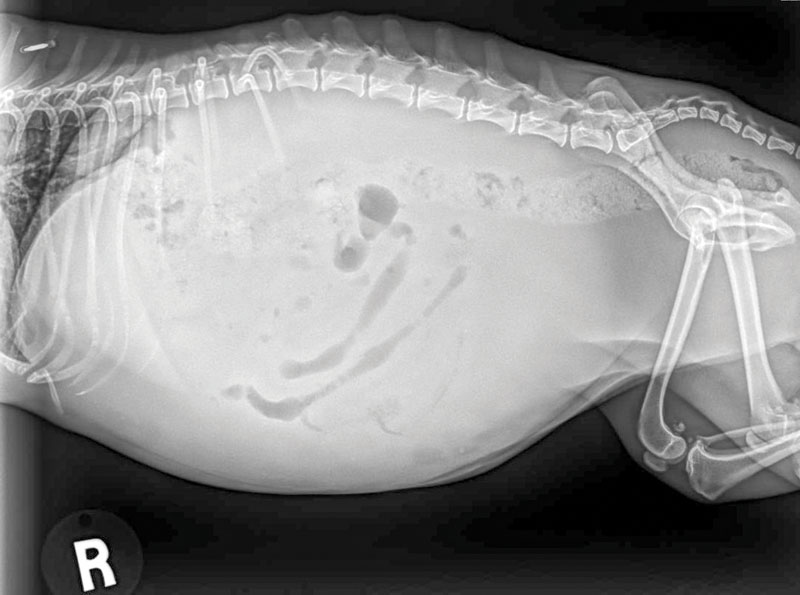
- Radiographs of the chest: These may be normal or have minimal changes supporting the diagnosis. Classic evidence of bronchitis with a mucus plug manifests on X-rays as "tram lines" or parallel lines that are well outlined when viewed side-on or as donuts when viewed end-on. Often, in more chronic or advanced cases, dilation of the bronchii and bronchioles may be evident.1
- Bronchoscopy (general anesthesia needed)
- Broncho-alveolar lavage
- Transtracheal wash (sedation needed)
- Other infectious disease testing, such as serology/PCR for infectious agents
- Heartworm testing
- Fecal (Baerman) to rule out lungworms
- Echocardiography to r/o cardiac causes of cough
- Trial course of medications: Response to clinical therapy
Concurrent disease
Some patients may have additional confounding medical conditions that either exacerbate or contribute to clinical signs, such as tracheal collapse (which is harder to medically manage), obesity, bronchomalacia, bronchiectasis, or ciliary dyskinesia. One or more of these conditions concurrently with CB can confound treatment, worsen prognosis, and proper client education is warranted.6,7
Treating chronic bronchitis
Goals of treating patients with CB include controlling clinical signs, preventing harm, and slowing the progression of histological changes created by the chronic cycle of inflammation and damage that follows. Ideally, if we can identify the inciting trigger and remove it 100 percent, great, but this is unlikely. Thus, our primary focus is on controlling inflammation.6,7 Thus, consider the following therapies, taking into account the mechanism of action, supporting evidence, and efficacy.1,2,4–7
- Anti-inflammatory doses of steroids: The mainstay of therapy
- Bronchodilators: Use with caution as these drugs can cause anxiety (pacing, restlessness, panting, agitation) and should be avoided in cardiac patients. Options include sustained-release generic theophylline, terbutaline, or albuterol (inhaled).
- Sedatives: Keep calm, some may have anti-cough properties (e.g., butorphanol), gabapentin, trazodone, acepromazine (no anxiolytic properties) if excitement and/or agitation worsens cough.
- Cough suppressants: These should be used with caution, as too much suppression could increase the risk of developing pneumonia. Further, they shouldn't be used alone; they are to be used adjunctively with anti-inflammatory doses of steroids because the inflammation must be addressed. Narcotics generally are the most effective, though some non-narcotic options may suffice in mild cases.
- Mucolytics: Thinning secretions may help make them easier to remove from the lungs and make coughing more effective. An OTC supplement, N-acetylcysteine, may be beneficial. However, the evidence is low-grade, and there is little support for significant improvement in health outcomes.
- Nebulization: Nebulization may help moisten secretions and improve clearance of mucus. One caveat is if nebulizing causes severe coughing fits, this can precipitate further inflammation and may worsen clinical signs/condition. A water vaporizer can be used to keep secretions moist, improving clearance with coughing, while nebulization (smaller droplet size than a vaporizer) may be more helpful.
- Obesity management: This is mandatory. Though the exact mechanism by which obesity worsens cough is unclear, research has shown that weight reduction dramatically improves outcomes, with a 5-10 percent reduction in coughing.4,5
- Exercise restrictions: Let the animal's health and abilities dictate activity levels; however, have owners avoid walking in extreme cold or hot weather and limit walks to cooler times of the day in warm seasons and warmer times during cold seasons. This limits cold-induced airway constriction. In warm weather, since panting is the primary means of heat expulsion, excessive panting can irritate the airway and increase inflammation, exacerbating signs and disease.
- Irritant/allergen reduction: Minimize exposure to possible triggers. This is a no-brainer and sounds simple, but it can be challenging for some owners. Smokers need to be educated about not only not smoking in the home or around the pet, but clothes need to be changed, hair washed before loving/holding/petting the dog, as it can trigger them, as well. Not using wood-burning stoves/fireplaces, not using certain chemical cleaners or related products, minimizing dust in the home (air filters changed regularly, air purifiers), keeping windows closed and air/heat on.
Dosing and drug details
More detailed info on steroids: Starting oral steroids is paramount. Prednisone/prednisolone at 1 mg/kg/day (anti-inflammatory doses) divided BID with the goal to taper to the lowest effective dose. Reduce doses weekly to every two weeks, depending on stability and response, until the lowest dose that controls signs is achieved. Many patients can reach every other day or every few days. If signs worsen during weaning, restart at the lowest dose at which signs were still controlled and wean more slowly.6 Mild cases may respond to a combo anti-histamine/low dose steroid: Trimeprazine/Prednisolone (Temaril-P) (1 tab/20 lbs twice daily then wean to the lowest effective dose.7–9
Inhaled steroids using the appropriate canine spacer (Aerodawg mask). Fluticasone propionate is the most frequently used generic option. Doses of 110mcg or 220 mcg can be used inhaled every 12 hours. Have the owner hold the spacer to the face for 10 seconds to permit the dose sufficient time to be inhaled.6,10 With cooperative care training, dogs usually learn to use the mask/spacer within a week or two. 11
Benefits of inhaled over oral steroids include fewer to no clinical signs, resulting in a decreased risk of diabetes development, obesity, and other related risks associated with chronic oral steroid use. Some dogs on inhaled steroids may still drink more than normal and may or may not show an increase in appetite. My experience is that inhaled is generally well tolerated and with minimal to no clinical signs.12
Bronchodilators: May help decrease the dose of steroids needed if used in conjunction, though the evidence is low-grade.6Options include:
- Theophylline slow-release formulation at 5-10 mg/kg BID. Often, I start with steroids first, and if an incomplete response occurs, or exercise intolerance, for example, continues, then I will add the bronchodilator.
- If patients on inhaled steroids warrant bronchodilator use, a consideration would be to use a combo inhaler that combines a long-acting bronchodilator like salmeterol and a steroid; however, research is limited, and cost may be prohibitive in some cases.
Cough suppressant dosing:6
- Hydrocodone: 0.25–1.0 mg/kg PO q 6–12 h)
- Codeine 1-2 mg/kg PO q 6-12 H
- Butorphanol 0.25–1.0 mg/kg PO q 6–12 h
- Maropitant (1 mg/kg PO q 24) - Research is limited on the use of neurokinin (NK-1) receptor Antagonists as an anti-tussive. However, what little there is suggests that, while it reduces cough and may improve outward clinical signs, it doesn't clear inflammation; thus, it demonstrates that, while it may be beneficial as an adjunct, it must be used in conjunction with steroids, again, the mainstay of therapy.13,14
Why no mention of antibiotics?
Remember, CB is not generally infectious! So, you'll notice antibiotics aren't listed among routine treatment options. Generally, we use antimicrobials in acute cough cases before steroids or concurrently to rule out infectious causes or to treat secondary invaders. However, consider proper antimicrobial use when reaching for antibiotics. In general, if the patient has been coughing for several months, without worsening/getting very sick, it is likely an inflammatory, noninfectious process. Remember if doxycycline is used, it has anti-inflammatory properties, so if a response occurs, we don't know whether it is because there was something infectious or merely because it is assisting in dampening the inflammation.4,5
If you think there may be a secondary infection, which these guys may be more prone to, as they cannot fully clear the airway to the same degree as a healthy dog, then consider your choices wisely. Think about:15–17
- What organisms may be most likely to invade/cause infection
- What antibiotics treat those organisms
- What antibiotics are first line based on human use concerns (avoid fluoroquinolones, avoid third and fourth generation cephalosporins. In other words, giving a cevofocin injection isn't appropriate antimicrobial use here, and always ensure to avoid drugs of great concern in people.
Complications of CB
Complications of CB do occur, uncommonly, but may include pulmonary hypertension (PH) and bronchiectasis. The latter carries an increased risk of infection due to mucus stasis, impaired mucus clearance, airway wall destruction, and ineffective cough. If a patient with bronchitis is less controlled and/or collapses with coughing episodes, consider pulmonary hypertension, evaluate for it, and treat. Although a study by Gamracy et al.18 found dogs with CB alone did not develop PH; concurrent underlying conditions likely contributed to its development.
A few other things to remember, advise clients about include:
- Harness vs. neck lead/collar
- Client education: Monitoring for persistent or worsening cough, blue-tinged gums or tongue, labored breathing, or collapse.
- Client education points:
- Ensure owners know that this is a lifelong condition that will require treatment.
- Advise on how to monitor resting respiratory rates at home, while sleeping and to look for worsening trends upwards as a possible sign of worsening disease, concurrent disease, or foreshadowing trouble ahead.
- Educate about side effects of oral vs inhaled steroids and risks of chronic oral use including but not limited to PU/PD, vomiting, polyphagia, weight gain (or less commonly loss), panting, lethargy or energy changes, agitation or other behavioral changes, shaking, alopecia, delayed wound healing, or increased risk of infections (e.g., UTI).
- Client expectations: We know we cannot cure these patients. Specialists suggest aiming for a 75-80 percent reduction in coughing episodes. Owners need to recognize they may have exacerbations, which could require hospitalization if severe, and treatment is for life.5,7
Additionally, canine CB is manageable, not curable. Diagnosis can be made based on history, clinical signs, duration of signs, response to therapy, airway sampling, and imaging. Sometimes, financially, owners cannot commit to various diagnostics, and a treatment trial is warranted. A response when other causes have been excluded likely suggests a correct diagnosis.Recognizing this condition, treating the inflammation with steroids (oral vs. inhaled) and managing cough, obesity, stress, triggers, and client expectations is paramount. CB is a common problem in our four-legged canines, and recognizing and treating it appropriately improves health outcomes and strengthens the human-animal bond. No one wants to be kept up all night by a coughing dog or watch their pet suffer unnecessarily.
Canine CB and One Health considerations
CB results from airway inflammation. Usually, dust, pollen, smoke (cigarettes/cigars/pipes), and other irritants play a key role in triggering clinical signs and can prevent successful responses to therapies if not managed or prevented. Further, animals act as sentinels for people. If animals are exposed to irritants, be it pollution-related, allergic, or environmental in origin, so, too, are the humans (both children and adults alike). Thus, reductions in allergens and irritants in the home may not only improve health outcomes for our patients but also for the pet's family. Further, when obesity management is paramount, and for our dogs who are regularly exercised, increasing activity with controlled leash walking can benefit pet parents and family members alike by increasing exercise, spending time together, and strengthening the human-animal bond. In our client education, we have a responsibility to provide means to reduce exposure to possible triggers, which may, in turn, benefit those in the family.19
Part 2 will focus on feline lower respiratory tract disease including asthma vs. bronchitis.
Erica Tramuta-Drobnis, VMD, CPH, is the CEO and founder of ELTD One Health Consulting, LLC. Dr. Tramuta-Drobnis works as a public health professional, emergency veterinarian, freelance writer, consultant, and researcher. She is passionate about One Health issues and believes that addressing pet health, food safety, agricultural health, and other related concerns can help highlight the interconnection of human, animal, and environmental health. Veterinarians are primed to be at the forefront of One Health initiatives, and she is passionate about issues from antimicrobial resistance to infectious disease control, vaccination health, and wildlife conservation. She is a strong advocate of evidence-based veterinary medicine and the president-elect of the Evidence Based Veterinary Medical Association (EBVMA). She hopes to promote the use of evidence-based practices through her writing and clinical work, preserving the human-animal bond and improving health outcomes within a One Health context.
References
- Rothrock K, McKiernan B, Shell L. Bronchitis, Chronic (Canine). In: VINcyclopedia of Diseases. Veterinary Information Network, Inc; 2022. https://www.vin.com/doc/?id=4953375&pid=607
- Brooks W. Chronic Bronchitis in Dogs. Veterinary Partner by VIN. June 8, 2024. https://veterinarypartner.vin.com/default.aspx?pid=19239&id=5138343
- Lappin MR, Blondeau J, Boothe D, et al. Antimicrobial use Guidelines for Treatment of Respiratory Tract Disease in Dogs and Cats: Antimicrobial Guidelines Working Group of the International Society for Companion Animal Infectious Diseases. J Vet Intern Med. 2017;31(2):279-294. doi:10.1111/jvim.14627
- Rishniw, Mark, McKiernan B. Chronic Bronchitis in Dogs is Neither Infectious nor Contagious. Veterinary Partner by VIN. February 24, 2022. https://veterinarypartner.vin.com/doc/?id=4952974&pid=19239
- Mark Rishniw Bvs. Chronic Bronchitis: Medical FAQs. VIN.com's Medical FAQ's. July 6, 2017. https://www.vin.com/doc/?id=5582776&pid=11200
- Carey SA. Canine Chronic Bronchitis and Bronchomalacia. In: American Board of Veterinary Practitioners (ABVP) 2024. VIN.com; 2024. Accessed April 13, 2026. https://www.vin.com/doc/?id=11967592
- Ettinger SJ, Feldman EC. Textbook of Veterinary Internal Medicine - eBook. Vol 2. Seventh. Elsevier Health Sciences; 2010.
- Brooks W. Trimeprazine Tartrate - Prednisolone (Temaril-P). Vet Partn. Published online July 6, 2025. https://veterinarypartner.vin.com/default.aspx?pid=19239&catId=102894&id=12740923
- Plumb's. Trimeprazine/Prednisolone. Accessed April 14, 2026. https://app.plumbs.com/drug/nveMMKI4i9PROD?source=search&searchQuery=temaril+p
- Chan JC, Johnson LR. Prospective evaluation of the efficacy of inhaled steroids administered via the AeroDawg spacing chamber in management of dogs with chronic cough. J Vet Intern Med. 2023;37(2):660-669. doi:10.1111/jvim.16673
- Montgomery MM, Rozanski EA, Freeman LM. Time to face mask/spacer acceptance in dogs and cats. Can Vet J. 66(9):1009-1012.
- Cohn LA, DeClue AE, Reinero CR. Endocrine and Immunologic Effects of Inhaled Fluticasone Propionate in Healthy Dogs. J Vet Intern Med. 2008;22(1):37-43. doi:10.1111/j.1939-1676.2007.0011.x
- Grobman M, Reinero C. Investigation of Neurokinin-1 Receptor Antagonism as a Novel Treatment for Chronic Bronchitis in Dogs. J Vet Intern Med. 2016;30(3):847-852. doi:10.1111/jvim.13935
- Aoki T, Eki K. Comparative study of the effects of antitussive drugs in a canine acute cough model. Vet Med Sci. 2024;10(5):e1549. doi:10.1002/vms3.1549
- Tramuta-Drobnis EL. More than a buzzword: Antimicrobial stewardship to combat AMR (and how veterinarians can help!). IndeVets. December 9, 2021. Accessed December 9, 2021. https://indevets.com/blog/more-than-a-buzzword-antimicrobial-stewardship-to-combat-amr-and-how-veterinarians-can-help/
- Tramuta-Drobnis EL. Antimicrobial Stewardship: Deciding when, where, how, and for how long. PVMAs Keyst Vet. 2024;(Summer 2024):6-11.
- Tramuta-Drobnis EL. A closer look at antimicrobial stewardship, a fundamental One Health issue. Vet Pract News. 2024;36(8):22-23.
- Gamracy J, Wiggen K, Vientós‐Plotts A, Reinero C. Clinicopathologic features, comorbid diseases, and prevalence of pulmonary hypertension in dogs with bronchomalacia. J Vet Intern Med. 2022;36(2):417-428. doi:10.1111/jvim.16381
- Kang S, Chen Y, Liu M. The Role of Companion Animals as 'Sentinels' From the One Health Perspective. Vet Med Sci. 2026;12(2):e70814. doi:10.1002/vms3.70814